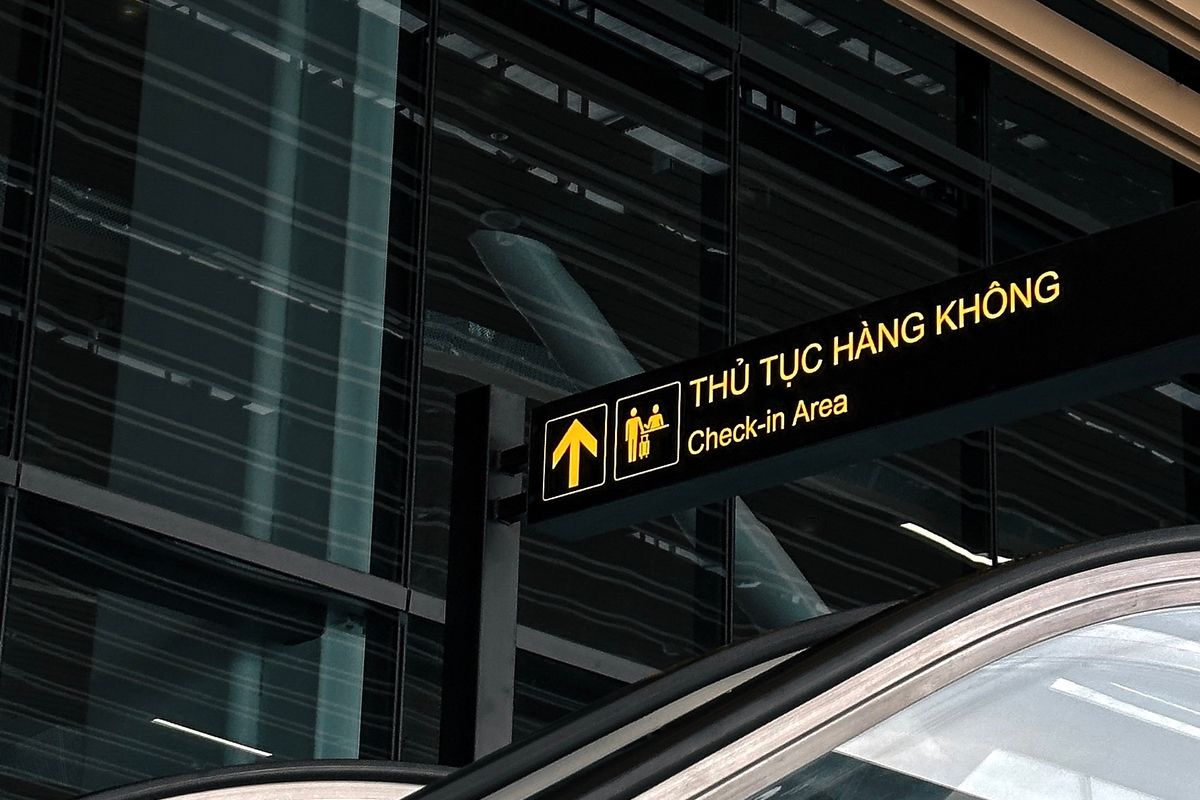
Getting lost in an airport is common, especially with a tight connection, a language you do not read and a terminal designed for thirty million passengers a year.
The reassuring part is that airports follow patterns. Once you know the pattern, you can navigate almost any of them.
How airports are laid out
Signage uses colour and symbols consistently: yellow or black for directions in many countries, aircraft symbols for departures, a suitcase for baggage claim, a person walking for exits. Gate numbers usually run in blocks per pier, so gate B42 tells you both the pier and roughly the distance.
Transfers between terminals are handled either by a shuttle train inside security, or a bus outside it, and the difference decides whether you need to re screen.

Step by step
Step 1: Find your gate number and pier first
Everything else follows from that. If the board says gate not yet assigned, look at the pier your airline normally uses and head in that direction rather than staying at the entrance.
Step 2: Use the airport map, not a general map app
Most large airports publish a terminal map, and many have an app with walking times between points. Walking time is the number that matters. Distance in metres is misleading when there are three escalators and a passport queue in between.
Step 3: Ask the right people
Information desks, airline staff at gates and cleaning or security staff generally know the terminal well. Show your boarding pass rather than describing your problem, it removes the language barrier immediately.
Step 4: Request assistance if you need it
Airports provide free special assistance for reduced mobility, and it also covers people who need guidance through the terminal. Book it in advance through the airline where possible, or ask at any information desk on the day.